




AI Early Warning Platform
An AI-powered early warning workspace that helps lending teams identify emerging repayment risk and prioritize customer reviews. The platform analyzes payment behavior, estimates the likelihood of a loan becoming 30 or more days overdue within the next 60 days, and connects each warning to the evidence behind it. Portfolio monitoring, explainable risk scores, and preventive action planning give risk and servicing teams a consistent workflow from detection to follow-up.
 React
React TypeScript
 Python
About the project
The Product: An early warning platform designed for unsecured consumer lending. The application supports risk analysts, portfolio managers, and servicing specialists who need to recognize changes in repayment behavior, identify customers requiring attention, and organize preventive reviews before accounts reach serious delinquency.
What it Does: It turns monthly loan and payment data into a structured review workflow. Teams can assess portfolio risk, track newly emerging signals, work through a prioritized case queue, and inspect the payment records behind each warning. Customer profiles, financial context, model explanations, and follow-up plans remain connected within the same workspace.
How it Works: Built with React, TypeScript, Python, and scikit-learn, the platform combines a trained Logistic Regression model with temporal probability calibration and a transparent rule baseline. The browser applies the fitted model to loan-level behavioral features and ranks eligible cases by estimated risk. Explanations link the score to specific feature contributions, while historical evaluation compares forecasts with later observed outcomes.
The Advantage: The platform connects risk detection with practical case management. Analysts can verify the evidence, record their assessment, explain an override, and document a follow-up with an owner and due date. Keeping scores, source records, and review decisions together helps teams maintain consistency and accountability, while decision history keeps reviews and plan updates available throughout the working session.
Learn tech information for this project
About the project
The Product: An early warning platform designed for unsecured consumer lending. The application supports risk analysts, portfolio managers, and servicing specialists who need to recognize changes in repayment behavior, identify customers requiring attention, and organize preventive reviews before accounts reach serious delinquency.
What it Does: It turns monthly loan and payment data into a structured review workflow. Teams can assess portfolio risk, track newly emerging signals, work through a prioritized case queue, and inspect the payment records behind each warning. Customer profiles, financial context, model explanations, and follow-up plans remain connected within the same workspace.
How it Works: Built with React, TypeScript, Python, and scikit-learn, the platform combines a trained Logistic Regression model with temporal probability calibration and a transparent rule baseline. The browser applies the fitted model to loan-level behavioral features and ranks eligible cases by estimated risk. Explanations link the score to specific feature contributions, while historical evaluation compares forecasts with later observed outcomes.
The Advantage: The platform connects risk detection with practical case management. Analysts can verify the evidence, record their assessment, explain an override, and document a follow-up with an owner and due date. Keeping scores, source records, and review decisions together helps teams maintain consistency and accountability, while decision history keeps reviews and plan updates available throughout the working session.
Learn tech information for this project
AI Early Warning Platform
Predictive loan monitoring with explainable risk scores, prioritized reviews, and preventive action planning.
ReactTypeScriptPythonAI Early Warning Platform
Predictive loan monitoring with explainable risk scores, prioritized reviews, and preventive action planning.
ReactTypeScriptPython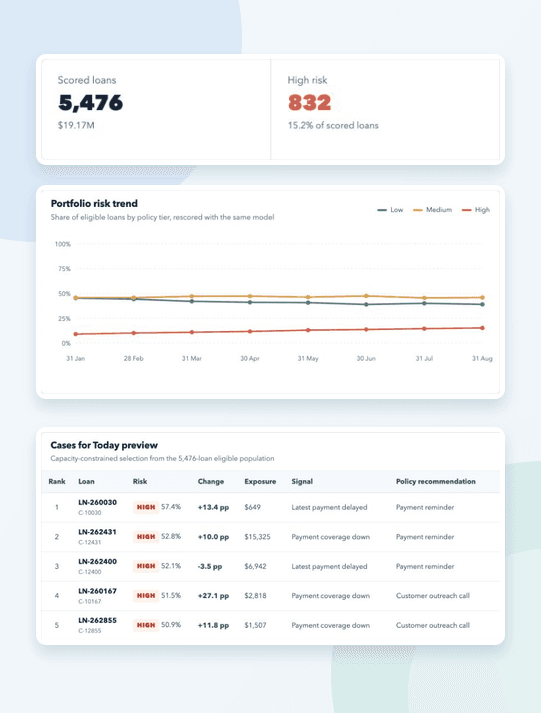
Features
Predictive Portfolio Monitoring
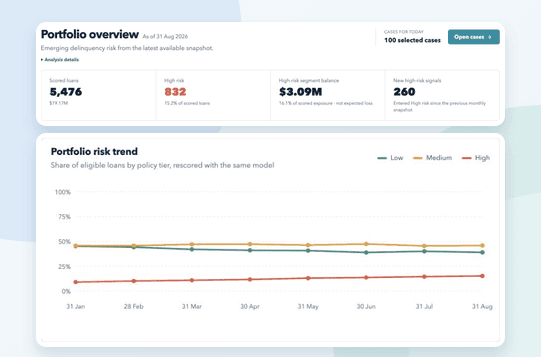
The portfolio workspace gives lending teams a consolidated view of repayment risk across eligible loans. It shows Low, Medium, and High risk segments, their outstanding balances, changes in risk distribution, and customers newly entering the High risk group. Analysts can move from this overview directly into the cases that need review.
The model estimates the likelihood of a new 30+ days-past-due event within a 60-day horizon. Cases for Today selects the 100 highest-risk eligible loans, aligning the queue with a defined review capacity. Search, risk filters, and an All customers view keep the wider portfolio accessible, so teams can inspect any eligible account alongside their immediate priorities.
Explainable Risk Analysis
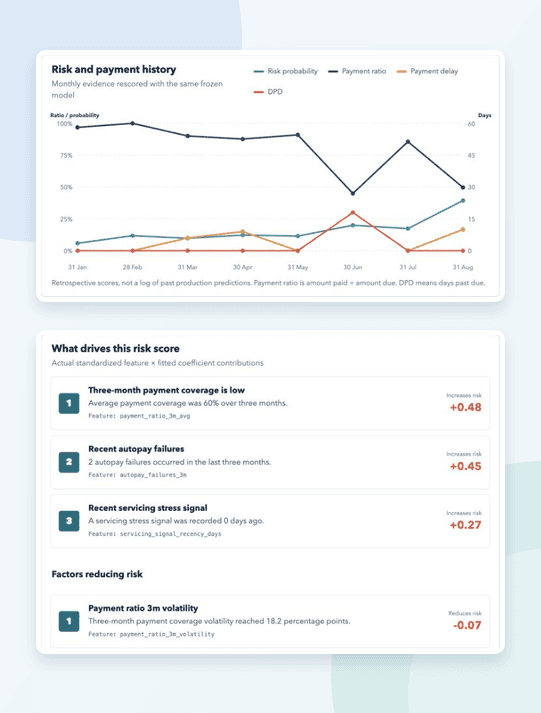
Each customer case brings together loan details, financial position, payment history, and early behavior changes. Analysts can trace a rise in risk to signals such as lower payment coverage, delayed installments, or failed automatic payments, then verify those signals against the underlying monthly records. First-time and repeat delinquency context adds another layer to the assessment.
Risk explanations are calculated from the fitted model's actual feature contributions, with separate factors that increase and reduce the score. The Model view extends this transparency to portfolio-level evaluation: predicted and observed event rates, selected-case outcomes, and a comparison with simple rules help teams assess how the scoring approach behaves at the same review capacity.
Preventive Action Workflow
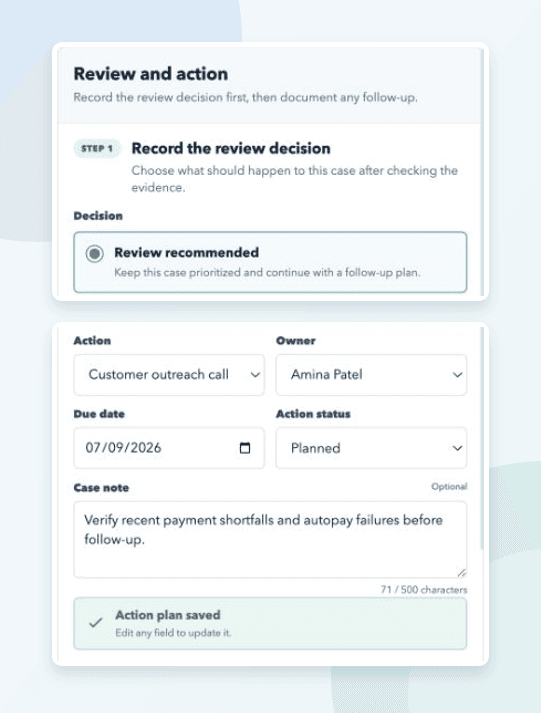
The review workflow turns a risk signal into a documented next step. Employees assess the case, confirm that it should remain prioritized, return it to monitoring, or record a reasoned override. They can then review the policy suggestion, choose an appropriate follow-up, and assign an owner, due date, status, and case note.
A saved review is required before an action plan can be recorded. Overrides and changes to suggested actions require an explanation, keeping employee judgment visible throughout the process. The Decisions workspace brings reviews, plans, and timestamped status changes together within the working session, helping teams coordinate follow-up and retain the reasoning behind each decision.
Features
Predictive Portfolio Monitoring
The portfolio workspace gives lending teams a consolidated view of repayment risk across eligible loans. It shows Low, Medium, and High risk segments, their outstanding balances, changes in risk distribution, and customers newly entering the High risk group. Analysts can move from this overview directly into the cases that need review.
The model estimates the likelihood of a new 30+ days-past-due event within a 60-day horizon. Cases for Today selects the 100 highest-risk eligible loans, aligning the queue with a defined review capacity. Search, risk filters, and an All customers view keep the wider portfolio accessible, so teams can inspect any eligible account alongside their immediate priorities.
Explainable Risk Analysis
Each customer case brings together loan details, financial position, payment history, and early behavior changes. Analysts can trace a rise in risk to signals such as lower payment coverage, delayed installments, or failed automatic payments, then verify those signals against the underlying monthly records. First-time and repeat delinquency context adds another layer to the assessment.
Risk explanations are calculated from the fitted model's actual feature contributions, with separate factors that increase and reduce the score. The Model view extends this transparency to portfolio-level evaluation: predicted and observed event rates, selected-case outcomes, and a comparison with simple rules help teams assess how the scoring approach behaves at the same review capacity.
Preventive Action Workflow
The review workflow turns a risk signal into a documented next step. Employees assess the case, confirm that it should remain prioritized, return it to monitoring, or record a reasoned override. They can then review the policy suggestion, choose an appropriate follow-up, and assign an owner, due date, status, and case note.
A saved review is required before an action plan can be recorded. Overrides and changes to suggested actions require an explanation, keeping employee judgment visible throughout the process. The Decisions workspace brings reviews, plans, and timestamped status changes together within the working session, helping teams coordinate follow-up and retain the reasoning behind each decision.
Contact Us






Anastasia Timoshenko
Regional Account Manager
1000+
Delivered projects
300+
Clients worldwide
700+
In-house developers
28+
Years in industry


 5.0 Ratings